Prasinos Tech Showcases Sustainable Water Innovation at ICC Conference on Water Security and Industrial Sustainability
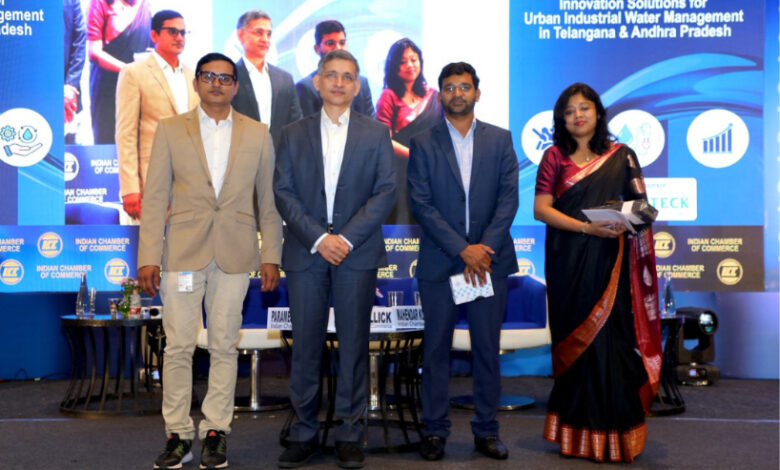
Hyderabad, (Telangana) [India]: As industries and cities across India grapple with increasing water stress, sustainable water management has become central to the country’s long-term economic and environmental priorities. Recognising this need, the Indian Chamber of Commerce (ICC) recently hosted its high-level conference, “Water Security & Industrial Sustainability: Innovative Solutions for Urban and Industrial Water Management in Telangana & Andhra Pradesh,” bringing together policymakers, industry leaders, technology innovators, researchers, municipalities, and sustainability professionals to discuss the future of water resilience.
Among the key contributors at the conference was Prasinos Tech Innovations, which participated as a speaker, sharing its expertise in advanced water treatment, nanobubble technology, and sustainable lake rejuvenation.


The conference focused on some of the country’s most pressing water challenges, including industrial water efficiency, wastewater treatment and reuse, circular water economy, smart water technologies, and policy frameworks required to build resilient urban and industrial ecosystems. These themes closely align with Prasinos’ mission of developing science-driven technologies that improve water quality while supporting long-term sustainability.
During the event, Prasinos highlighted how its innovative solutions are helping industries and public agencies move beyond conventional water treatment methods. The company showcased its work in industrial wastewater treatment, where advanced oxygenation technologies improve treatment efficiency and support water reuse, as well as its lake rejuvenation solutions, which combine nanobubble technology with sustainable restoration practices to improve dissolved oxygen levels, reduce sludge accumulation, and restore ecological balance.
Prasinos’ flagship technologies, SWANCAV and NanoCav, attracted significant interest for their ability to address complex water quality challenges through energy-efficient and chemical-free processes. Developed and manufactured in India, these technologies reflect the company’s commitment to delivering practical, scalable solutions tailored to Indian environmental and industrial conditions.
Beyond technology demonstrations, the conference also provided an important platform for collaboration. Representatives from government departments, municipal bodies, research institutions, infrastructure organisations, and private industry engaged in discussions on how innovative water technologies can support future-ready infrastructure and strengthen India’s water security.
For Prasinos, participation extended beyond presenting products. The event created valuable opportunities to build strategic relationships with policymakers, sustainability experts, and technology partners while exploring future pilot projects and collaborative initiatives focused on industrial water management and ecosystem restoration.
“Water security requires collaboration between technology developers, industries, governments, and research institutions,” said Dr. Aditi Mullick, from Prasinos Tech Innovations. “Platforms like the ICC conference enable meaningful dialogue around practical solutions that can improve water resilience while supporting sustainable industrial growth.”
As India accelerates investments in climate resilience, wastewater reuse, and sustainable infrastructure, innovation will play an increasingly important role in addressing growing water challenges. Through continued research, indigenous engineering, and collaborative partnerships, Prasinos Tech Innovations remains committed to advancing technologies that support cleaner water, healthier ecosystems, and more sustainable industrial development.
By participating in forums such as the ICC Water Security & Industrial Sustainability Conference, Prasinos continues to strengthen its role as a technology partner contributing to India’s transition towards smarter water management, circular water systems, and sustainable environmental stewardship.